
A road is constructed. A school is built. A water project is commissioned. Farmers receive support to increase agricultural production. A county allocates resources to improve health services.
On the surface, these are development interventions.
But there is another question we must increasingly ask: how resilient are these investments to the climate realities facing the communities they are intended to serve?
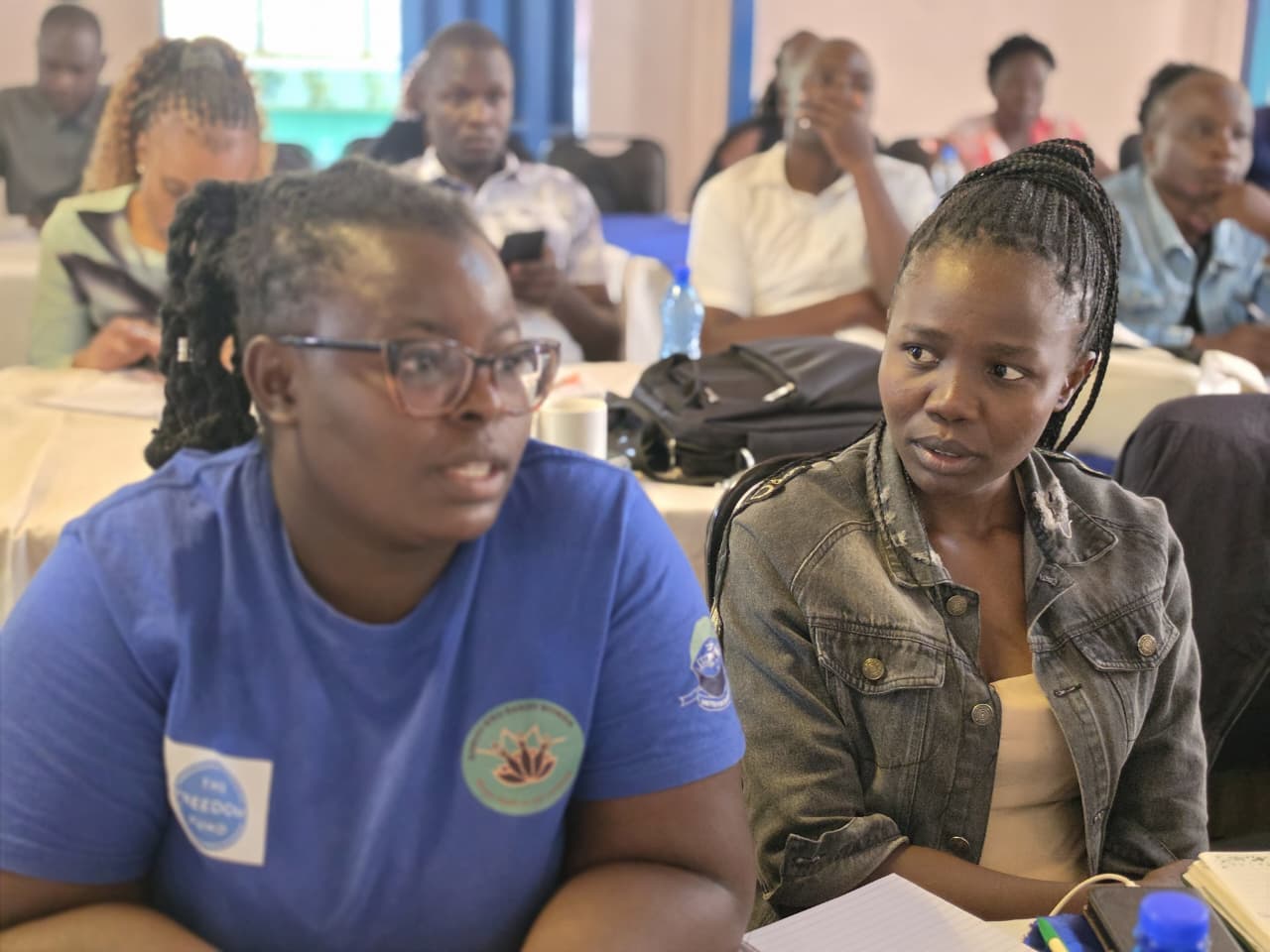
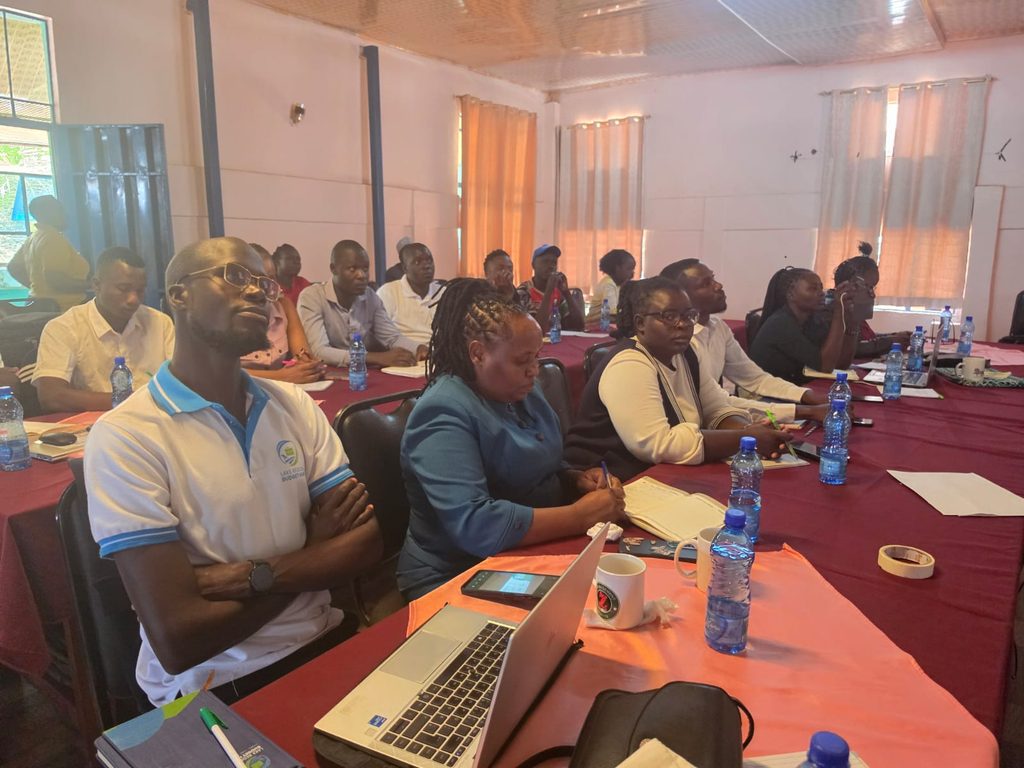
This question has become particularly important for Baridi Kwa Baridi Women CBO as we participate in a four-day capacity-building training for Civil Society Organisations on budget tracking, climate change adaptation and agroecology, organized by DaCCA under the Communities of Practice, Busia Chapter .
As we conclude the second day of the training, one lesson stands out clearly: climate change cannot be treated as a standalone environmental concern. It is a development, governance, livelihoods and public-finance issue.
And for civil society, that makes it an accountability issue.
From understanding climate change to understanding vulnerability
The first day took us back to the foundations of climate change.
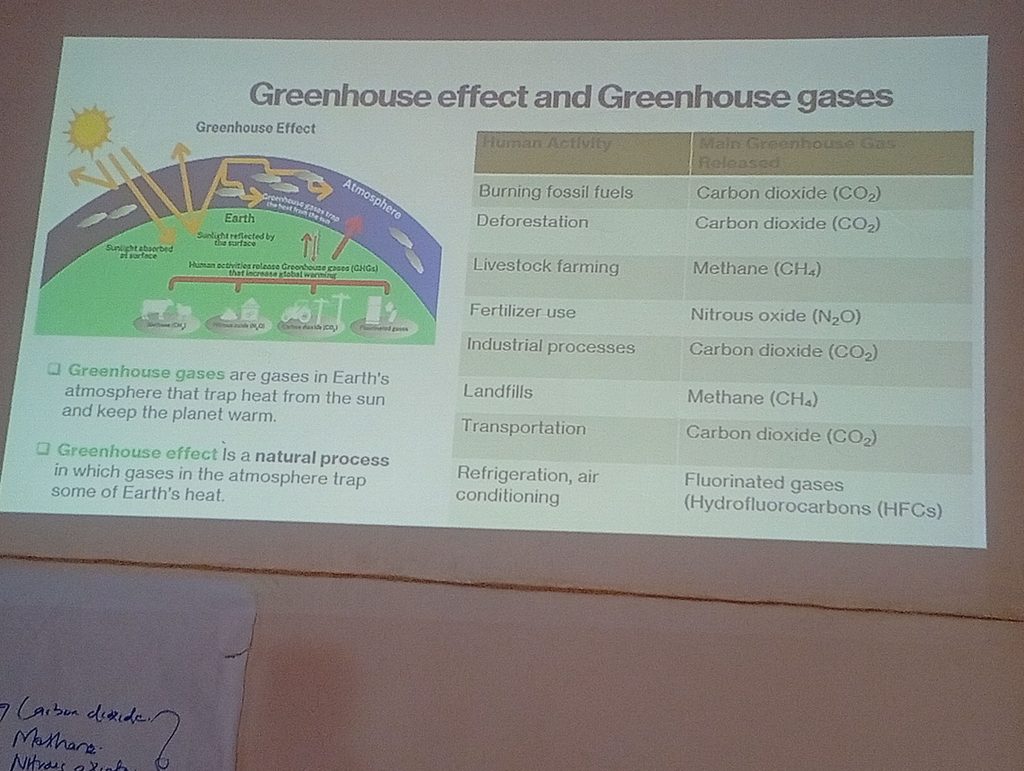
We unpacked concepts such as global warming, greenhouse gas emissions, climate hazards, risks, vulnerability and resilience, while examining the human activities that contribute significantly to climate change, including the continued use and combustion of fossil fuels.
But perhaps more important than understanding the terminology was understanding the relationship between hazard and vulnerability.
A climate hazard does not affect all communities in the same way.
A flood can become a destroyed road, a flooded classroom, a disrupted health service or a lost harvest. A prolonged dry spell can become food insecurity, loss of household income and increased pressure on already limited water resources.
The climate event is only part of the story.
The other part is whether people, systems and institutions are prepared to withstand it.
This distinction between climate hazards, exposure, vulnerability and resilience is critical for development actors because it changes how we think about solutions.
It challenges us to move beyond responding to disasters after they happen and towards strengthening the resilience of communities and systems before climate shocks occur.
Climate change does not respect sector boundaries
One of the strongest messages emerging from the training is that there is no meaningful way to isolate climate change from development.
Its implications are already visible across sectors.
In agriculture and rural development, changing rainfall patterns, droughts, floods, soil degradation and shifting pest and disease patterns can undermine food production and household livelihoods.
In education, climate-related shocks can disrupt attendance, damage infrastructure and deepen vulnerabilities that already affect children’s access to learning.
In health, climate change can influence disease patterns, water and sanitation conditions, food and nutrition security, heat exposure and the resilience of health systems.
In water and the environment, changing rainfall patterns, ecosystem degradation and pressure on natural resources create risks for both human wellbeing and ecological systems.
In infrastructure and energy, roads, drainage systems, bridges, public facilities and energy infrastructure must increasingly be designed with current and future climate risks in mind.
And in governance, justice and social protection, climate change raises fundamental questions about who bears the greatest burden of climate impacts, who participates in decision-making and who has access to the resources required to adapt.
This has particular implications for communities that already experience social and economic vulnerability.
Climate change can therefore deepen existing inequalities unless climate responses deliberately prioritize inclusion, participation and equity.
From global commitments to local realities
Climate action does not begin and end at the global level.
The international climate architecture provides the framework, but its success ultimately depends on what happens nationally, locally and within communities.
The United Nations Framework Convention on Climate Change (UNFCCC) established the foundation for international cooperation on climate change in 1992. The Kyoto Protocol subsequently introduced binding emission reduction commitments for developed countries, while the Paris Agreement of 2015 established a broader global framework for climate action, including the goal of holding the increase in global average temperature to well below 2°C above pre-industrial levels while pursuing efforts to limit warming to 1.5°C.
Countries translate these commitments into national priorities through instruments such as Nationally Determined Contributions (NDCs).
For Kenya, climate action is anchored in a range of national policies and legal frameworks, including the Climate Change Act, the National Climate Change Action Plan (NCCAP) 2023–2027, the National Adaptation Plan, Kenya’s updated NDC and the Long-Term Low Emission Development Strategy 2022–2050.
But frameworks only matter when they influence decisions.
And that brings the conversation much closer to home.
What does climate action mean for Busia?
For communities in Busia County, climate policy must ultimately translate into decisions that affect everyday life.
The county has developed its own climate governance framework, including the Busia County Climate Change Act, 2021; County Climate Change Fund Regulations; County Environment Policy; Busia County Climate Change Action Plan 2023–2027; and the County Integrated Development Plan 2023–2027.
These frameworks provide important entry points for climate-responsive development and locally led climate action.
But the existence of a policy does not automatically produce resilience.
The more difficult questions are:
Are climate priorities adequately reflected in county plans and budgets?
Are resources reaching the communities most exposed to climate risks?
Are investments designed with future climate conditions in mind?
Are communities participating meaningfully in decisions about the climate interventions that affect them?
And perhaps most importantly:
Are we measuring whether these investments are actually reducing vulnerability?
These are not questions for the government alone.
They are questions for civil society, communities, development partners, elected representatives and every institution involved in public resource management.
Climate finance: following the money
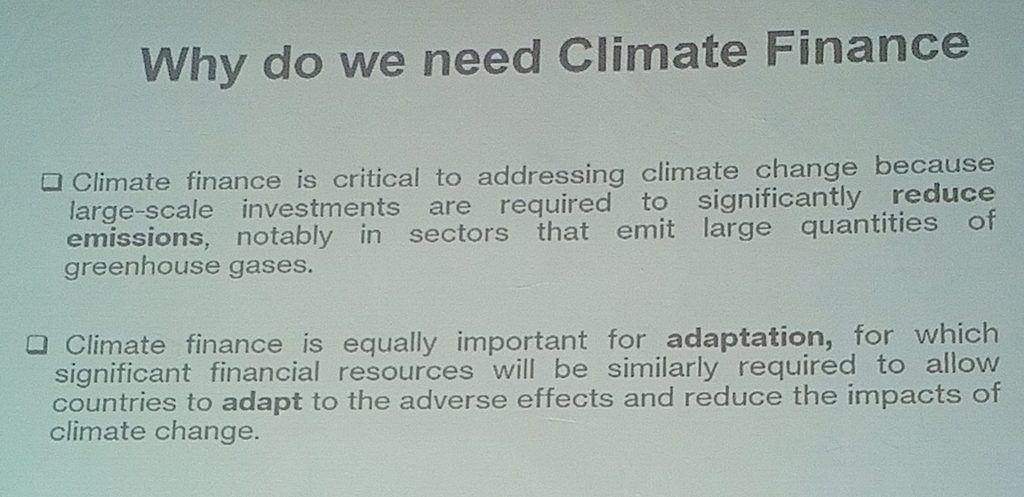
This is where climate finance becomes particularly important.
Climate action requires resources. Adaptation requires resources. Resilient infrastructure requires resources. Agroecological transitions require resources. Ecosystem restoration requires resources.
We therefore explored the different sources and channels through which climate finance is mobilized, including multilateral mechanisms such as the Green Climate Fund (GCF) and Global Environment Facility (GEF), as well as domestic public financing mechanisms.
Of particular relevance to county-level climate action is Financing Locally-Led Climate Action (FLLoCA), which seeks to strengthen county and community capacity to identify, prioritize and implement locally led climate investments.
For civil society, however, understanding climate finance cannot stop at knowing where the money comes from.
We must also learn to follow the money.
How much has been allocated?
Where has it been allocated?
What was actually spent?
Who was intended to benefit?
What was delivered?
And did the investment address the climate vulnerability it was intended to address?
This is where budget tracking becomes climate advocacy.
Why the budget cycle matters
Climate priorities cannot be effectively advocated for after the budget has already been approved.
They must be introduced, defended and monitored throughout the planning and budgeting process.
This makes understanding the county budget cycle an essential part of climate advocacy.
For CSOs, knowledge of when key planning and budgeting decisions are made creates opportunities to influence priorities before resources are committed.
It allows us to engage with development plans, sector priorities, public participation processes, fiscal frameworks, budget proposals and implementation reports with a much clearer understanding of where climate considerations can and should be integrated.
Advocacy without an understanding of the budget is often advocacy without a clear pathway to implementation.
If we want climate-resilient roads, water systems, schools, health facilities and agricultural programmes, we must be able to identify them in plans, see them in budgets and follow them through implementation.
Climate-proofing development: asking better questions
Another important reflection from the training has been the concept of climate-proofing development projects.
A development project should not only respond to today’s needs. It should also consider the risks that tomorrow’s climate may bring.
A road project should consider drainage and flood risk.
A water investment should consider the sustainability of its water source under changing climatic conditions.
An agricultural programme should consider drought, flooding, soil health, changing rainfall patterns and the resilience of farmers’ livelihoods.
A school should be more than a physical structure; its location, infrastructure, water and sanitation systems and disaster preparedness should be considered in relation to climate risks.
This represents a fundamental shift in thinking:
We should not ask only whether a development project will deliver its intended output. We should also ask whether that output will remain functional and beneficial in a changing climate.
That is what applying a climate lens to development begins to mean.
Carbon markets: opportunity, but also accountability
The training also introduced us to the increasingly important and complex area of carbon markets.
Carbon markets create mechanisms through which verified emission reductions or removals can generate carbon credits that may be traded.
They present potential opportunities for climate action, investment and community benefits, including through activities such as ecosystem restoration, renewable energy and other interventions that reduce or remove greenhouse gas emissions.
But opportunity must be accompanied by accountability.
For communities, particularly where land and natural resources are involved, questions around participation, transparency, benefit-sharing, environmental integrity and social safeguards cannot be treated as secondary considerations.
This creates an important role for civil society.
CSOs can help communities understand proposed carbon projects, scrutinize agreements, demand transparency, monitor benefit-sharing arrangements and advocate for meaningful community participation.
Climate finance should not only be measured by how much money enters a project. It should also be measured by who benefits, who participates and whether the intervention delivers genuine climate and development outcomes.
Agroecology and the question of resilient livelihoods
The focus on agroecology adds another important dimension to this conversation.
For communities whose livelihoods depend heavily on agriculture, climate resilience cannot be separated from the health of the soil, availability of water, biodiversity, food systems and economic sustainability of farming.
Agroecological approaches offer opportunities to strengthen resilience while supporting more sustainable relationships between people, agriculture and ecosystems.
For Baridi Kwa Baridi, this is particularly relevant because climate advocacy must ultimately connect to the realities of households.
Climate change is experienced not in policy documents, but through questions such as:
Can a farmer still produce enough food when rainfall becomes unpredictable?
Can a family access water when a dry season becomes longer?
Can children continue learning when climate shocks disrupt household livelihoods?
Can communities recover when infrastructure repeatedly fails under extreme weather?
These are development questions.
And increasingly, they are climate questions too.
What this means for Baridi Kwa Baridi
This training has therefore not simply expanded our knowledge of climate change.
They have challenged us to rethink our role as a civil society organization.
Climate change must become part of how we understand public budgets, development planning, community participation, social protection, livelihoods and accountability.
Going forward, this means strengthening our capacity to:
– engage in county planning and budgeting processes with a climate lens;
– track climate-related allocations and expenditure;
– support communities to identify and articulate their climate priorities;
– advocate for climate-resilient public investments;
– promote sustainable and resilient livelihood approaches;
– strengthen accountability around climate finance;
– and ensure that women, children, youth and other vulnerable groups are meaningfully represented in climate decision-making.
Our responsibility is not simply to ask whether the government is implementing climate projects.
It is to ask whether those investments are equitable, resilient, accountable and responsive to the realities of communities.
From awareness to accountability
As we enter the third day of the training, one conclusion is becoming increasingly difficult to ignore:
Climate action cannot remain the responsibility of environmental actors alone.
It belongs in development planning,public budgets, agriculture,education, health,infrastructure, social protection and it belongs in civil society advocacy.
For Baridi Kwa Baridi, this training is therefore not simply about acquiring another area of technical knowledge.
It is about strengthening our ability to ask better questions on behalf of the communities we serve.
Because the real measure of climate action is not how many policies we have written, meetings we have held or projects we have launched.
It is whether communities are safer, more resilient, better able to withstand climate shocks and better positioned to shape the decisions and investments that affect their future.
The work ahead is to move from climate awareness to climate-informed advocacy; from policy commitments to budget allocations; from allocations to implementation; and from implementation to accountability and measurable change.
Climate change is changing the context in which development happens. Our advocacy must change with it.





Comments are closed